
First what is waterbirth and how is different than laboring submersed in water?
A waterbirth is when you remain in the water during the pushing phase of labour and the actual birth of the baby. The baby is brought to the surface of the water after birth. Water immersion in labour is when you simply labour in a tub or pool of water before baby is born and get out of the water for the pushing phase and baby is born not in the water.
The term land birth or conventional birth is to refer to a birth in which the baby is born not in a tub. The word hydrotherapy can be used to describe the therapeutic use of water during labor and/or birth. Hydrotherapy doesn’t just refer to using a birthing pool or tub, but also a shower, or any other form of use of water in labour.
The safety of water immersion during labour is well accepted, however, health care professionals world wide often disagree on whether waterbirth is safe.
Over the last few decades there has been more research on the benefits and risks of waterbirth and the effects it has on the newborn as well as the birthing person. Evidence Based Birth does a great job breaking down all the different studies and the evidence in each. However, for the purpose of this blog, I’m just going to talk about benefits, and risks and provide a link to their site for you to review the evidence further yourself.
Some amazing benefits of waterbirth can include but are not necessarily limited to are protective of normal vaginal birth with a higher chance of a faster less complicated birth, less need for synthetic oxytocin, lower rate of forceps or vacuum assisted delivery, higher rate of intact perineum and lower episiotomy rates, a decrease in pain during labor, lower rates of postpartum hemorrhage and maternal infection, a higher birth satisfaction, and positive health outcomes for the baby.
Some risks of a waterbirth include a higher risk of newborn cord avulsion (which is not an emergency and can be prevented), the rates of newborn infection do not differ between waterbirth and landbirth but there is a slightly higher rate of uterine infection in the frist 6 weeks after a water birth (0.31% vs 0.25%), the risk of transietn tachypnea wither waterbirth does not seem to be higher, a waterbirth cannot be combined with some interventions like epidurals, synthetic oxytocin depending on your birthing location.
Although most people find laboring submersed in water pleasurable and a good pain reliever, it is possible to change your mind. Some individuals say that they got cold, or baby got cold while in the tub and that when entering the tub their contractions lessened or went away entirely.
While all of that is possible it is important to know the best time to use a birth tub or pool in order to get the best results possible. There water temperature needs to be maintained between 37-38 degrees Celsius to help prevent hypothermia or hyperthermia of the birthing person or newborn. Getting into the birthing pool too early in labor can cause contractions to slow. The best time to enter the pool while in labor is after you’ve reached 6cm, preferably at transition or 8cm dilated. By waiting until that point in labor to enter the birth pool, there will be a lesser chance of labor slowing down and may actually help speed labor along. Plus transition is often described as the most painful part of labor and the hydrotherapy effect would be most beneficial during that time period.
Based on the evidence from many research studies current evidence suggests that waterbirth is a safe option for families. If you are having a low-risk pregnancy and birth, have a desire for an unmedicated, low-intervention birth, and are there are experienced staff who are trained in attending waterbirths, then evidence supports this birth method. In the single largest study on waterbirth they found that babies in the waterbirth group had better outcomes than those born in the land birth group.
Unfortunately in the US and Canada there are still very few hospitals that provide waterbirth as an option. If you are interested in waterbirth, find out if there’s a facility nearby that provides waterbirth or see if you’re eligible for a home waterbirth with a midwife, and rent a birth pool like I offer to those in my area.
It’s important to understand the benefits and risks to all your options in labor and birth. Whether you decide to take advantage of the amazing benefits of laboring submersed in water and then birth on land or rent a birth pool and have a waterbirth, the choice is ultimately yours.
For a break down of the evidence and studies on waterbirth visit this link
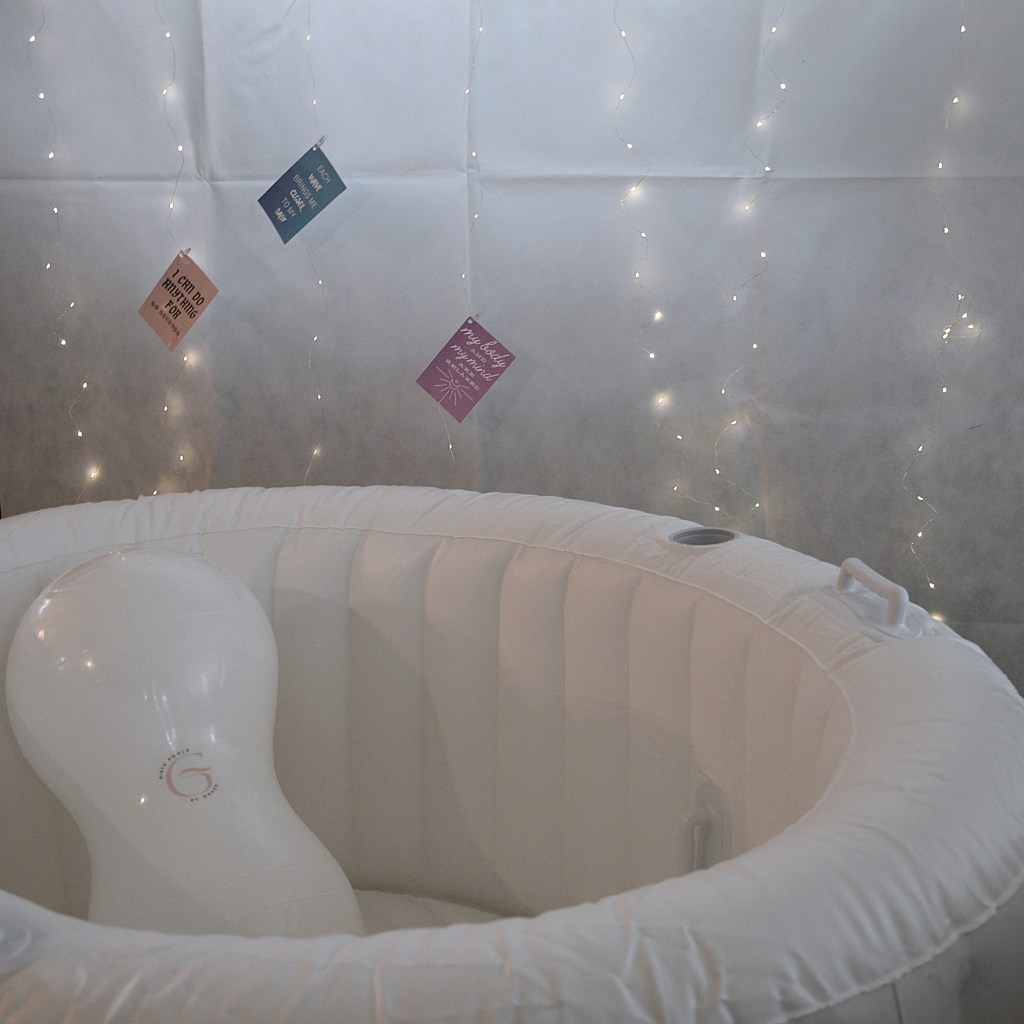
For a birth pool rental in Windsor-Essex County and the surrounding areas contact me and see if my Ivory birth pool is available for your due date.
 The Golden Hour Doula | Doula | Birth Photographer | Birth Pool Rentals | Windsor, ON
Leave a comment